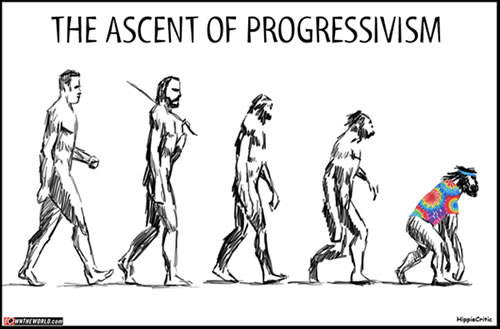
Funny how both sides proclaim a desire for freedom and how both the market and the nanny state can take it away. I'm a big fan of the middle of the road. I hate regulatory audits but love my middle class customers and public fishing access.

http://www.salon.com/2012/03/04/beyond_the_free_market/Progressives were also the driving force behind early regulation experiments, supporting the creation of state agencies to oversee industries such as the railroads and other trusts. At the federal level, these debates led to the creation of the Interstate Commerce Commission and later the Federal Trade Commission. Although both agencies faced stiff opposition from the Supreme Court which routinely narrowed the scope of regulatory power on antitrust issues, these efforts helped set the stage for the New Deal. At the state level, rate commissions and other forms of regulatory oversight of the economy became more common. Finally, at the local level, progressives engaged in a spirited effort to develop systems of public utilities. From transportation systems to water provision, reformers argued that private monopolies in these necessity-providing industries undermined the public good. Through unique municipal oversight, and in some cases outright public ownership, progressives tried to deploy the powers of the states to ensure that basic necessities were provided effectively and fairly.
The common thread running through these disparate reform efforts was a distinctly progressive view of freedom that contrasted with the free-market views of conservatives. This vision was most clearly articulated by Progressive Era thinkers such as the philosopher and activist John Dewey, and Supreme Court Justice Louis Brandeis.
For both Dewey and Brandeis, freedom meant more than just individual autonomy and free market exchange. Instead, freedom was achieved when citizens were able to live meaningful lives. In the modern economy, creating this sort of freedom meant enacting public policies that would protect individuals from extreme insecurity and exploitation.