
Chicago is the US front in the Mexican war against the cartels.
The two Mexican couriers were hauling a tractor-trailer full of cash: $3 million collected for drugs sold on the streets of Chicago. Juan Gonzalez and David Zuniga were driving their rig through Indiana in October 2011, transporting the money to Mexico. As they stopped to fix a flat tire, three members of the Gangster Disciples, Chicago’s biggest street gang, held them up at gunpoint.
The gang had bought the drugs -- and now these members wanted the money back. They pistol-whipped and handcuffed Zuniga. As the gangsters were hooking their own purple Kenworth cab to the money-laden trailer, Gonzalez fled through a cornfield and called the police.
After a 15-mile chase north along Interstate 65, lawmen intercepted the rogue truck, arrested the gang members and recovered the loot, Bloomberg Markets magazine will report in its October issue.
Gonzalez, who worked for Mexican drug lord Joaquin Guzman, made a surprising request that fall day: He wanted proof for cartel leaders that police had confiscated the $3 million.
“He knew, without a receipt, they’d kill him or his family in Mexico,” says Jack Riley, head of the U.S. Drug Enforcement Administration for a five-state region that includes Illinois and Indiana.
Such is the fear that Guzman inspires on both sides of the border. Operating from heavily guarded compounds in the Sierra Madre of northern Mexico, Guzman’s Sinaloa cartel supplies 80 percent of the heroin, cocaine, marijuana and methamphetamine -- with a street value of $3 billion -- that floods the Chicago region each year, the DEA says. Job seekers in Guzman’s 150,000-strong enterprise must list where their relatives live.
Get Shorty
As far as the authorities can tell, 5-foot-6-inch (1.68-meter) Guzman, a grade school dropout known as El Chapo (or Shorty), has never set foot in Chicago.
Yet during the past seven years, Guzman, who’s now in his late 50s, has seized control of the supply and wholesale distribution of drugs in Chicago and much of the Midwest.
This steady flow of dangerous substances is sparking pitched and often deadly turf wars between Chicago’s splintered, largely African-American and Latino gangs.
“Most of Chicago’s violent crime comes from gangs trying to maintain control of drug-selling territories,” Riley says. “Guzman supplies a majority of the narcotics that fuel this violence.”
Confounding Police
The Department of Justice indicted Guzman in absentia in Chicago in August 2009, charging him with conspiring to transport drugs across international borders. He has so far confounded all efforts by Mexican and U.S. authorities to put him and his cartel out of business. Two years after officers thwarted the Indiana hijacking, police still intercept drugs or cash heading in or out of Chicago every couple of weeks. That pales in comparison to what they miss.
“We’re lucky to stop a 10th of what’s going through,” says Terry Risner, sheriff of Jasper County, Indiana, 80 miles (130 kilometers) southeast of the city.
The pipeline of Sinaloa drugs to Chicago runs through the predominantly Mexican neighborhood known as Little Village on the city’s southwest side, authorities say. Yet four years after federal prosecutors indicted twins Margarito and Pedro Flores for being key Guzman distributors in Little Village, police don’t know who has succeeded them.
‘Home Port’
The drugs continue to pour in. In a 2006 conversation monitored by Mexican police, Guzman said he wanted to make America’s third-largest city his “home port.”
He’s done that, says Art Bilek, a retired detective who’s executive vice president of the Chicago Crime Commission, a public-safety group that in February named Guzman the city’s public enemy No. 1.
“We had freelance distributors in Chicago before,” Bilek says. “Guzman has taken them over one by one. He centralized everything -- the shipping, warehousing and distribution of drugs, and the collection and transport of money back to Mexico.”
Chicago had cartel drugs in the past but not cartel leaders, Bilek says.
“Now, Guzman has top people in here to make sure things run smoothly,” he says.
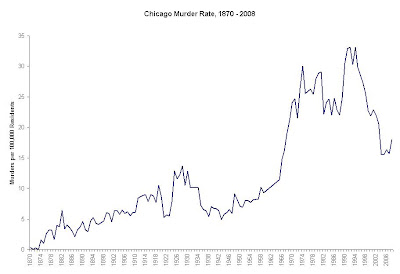
The link between drugs and crime, including violent crime, would be hard to overstate in Chicago. Eighty-six percent of adult males arrested in Chicago last year tested positive for drug use. Chicago, with a population of 2.7 million, had 506 murders in 2012, the highest per capita among the four most populous U.S. cities.
Supplier’s Power
With Guzman gaining near-monopoly control, they can’t negotiate prices: He personally dictates how much distributors pay his operatives, court documents allege. In the past decade, wholesale heroin prices have doubled in Chicago to the current cost of $80,000 a kilogram, says Nick Roti, head of anti-gang enforcement for the city’s police. For street sellers to keep profits flowing, they must seize ground in sometimes lethal block-by-block combat.
“The supplier has all the power now; he can set prices,” says Ward, 51, who’s chief executive officer of Block 8 Productions LLC, a record and film company. “It used to be honor among thieves,” he says of gang protocol that punished renegade behavior like the hijacking in Indiana. “Now, it’s by any means necessary.”
Memorials that have sprung up south and west of downtown reflect a grim statistic: The city suffers an average of more than five shootings and more than one murder every day.
Guzman stepped into the vacuum in Chicago by first winning a key stronghold in Mexico: the transshipment border town of Ciudad Juarez. He was born 300 miles south in the mountain village of La Tuna de Badiraguato, according to Malcolm Beith’s “The Last Narco: Inside the Hunt for El Chapo.” Relatives sponsored his rise in the drug trade, the book says.
Guzman set his sights on Juarez, a sprawling city of 1.5 million, when cartel leader Amado Carrillo Fuentes died during plastic surgery in 1997.
Severed Limbs
Incarcerated in a Jalisco, Mexico, prison on murder and drug-trafficking convictions, Guzman escaped in a laundry cart in 2001 and unleashed a spree of assassinations starting seven years later, police say. By 2012, he’d won much of Juarez and the route through El Paso, Texas, and highways north.
A 26-year-old member of the rival Aztec gang recounts those deadly days. Sitting in a sweltering room on a west Juarez street where a table fan strapped to a wooden beam provides no respite from the suffocating heat, the man runs his forefinger under his chin to show how he slit throats.
He recalls how hard it was to sever the arms and legs of one of his victims with a hacksaw because bones are so strong. In all, more than 10,000 people died in the mayhem that cemented Guzman’s grip on the Juarez crossing.
In 2009, a Guzman distributor ran 11 warehouses and stash houses in Chicago and southwestern suburbs. One was in Bedford Park, steps from a facility used by FedEx Corp., operator of the world’s largest cargo airline.
“He’s a logistical genius and a hands-on guy,” Riley says, adding that Guzman is also a billionaire. “If he had turned his talents to legitimate business, he’d probably be in the same situation moneywise.”
The Chicago police strategy of saturating high-crime areas with patrols appears to be cutting the homicide rate. Murders through Sept. 8 fell 21 percent -- to 297 from 377 -- from the 2012 period. Yet the authorities have made scant progress in cracking Sinaloa’s supply chain.
More Arrests?
In January, 70 investigators led by the DEA set up what they call the Chicago Strike Force in a three-story building. One investigation spurred the indictment and arrest of 21 defendants in June for distributing heroin and cocaine in Illinois, Indiana and Wisconsin. Riley expects more arrests, though the narcotics keep flowing.
“The rivers of drugs coming into Chicago are diverse and sufficient to meet demand,” says John Hagedorn, a criminologist at the University of Illinois at Chicago. “This is not a war you can win.”
Civic leaders and police vowing to reduce the gunfire have homed in on gang-against-gang retribution. On the fifth floor of their South Side headquarters, police use facial-recognition software to scan images from 24,000 city surveillance cameras. Within minutes of a shooting, they send e-mails and texts about gang affiliations -- and potential locales for retaliation -- so patrols can swarm the trouble spots.
http://www.bloomberg.com/news/2013-09-1 ... rders.html" onclick="window.open(this.href);return false;Guzman’s grip on the U.S. Midwest may actually be strengthened by a move Mexican authorities hailed as a victory in their war on trafficking. In July, they arrested Miguel Angel Trevino Morales, head of the Zetas cartel, which Sinaloa has been battling over a route through Nuevo Laredo on the U.S. border.
“Trevino’s arrest makes it easier for Sinaloa to conquer territory,” says Jorge Chabat, a security analyst at the Mexico City-based Center for Economic Research and Teaching.
The reach of Sinaloa and its elusive leader extends from the rugged Sierra Madre to the dusty streets of Juarez to Chicago and beyond.
“They’re the pre-eminent organized crime group in the world today,” the Chicago Police Department’s Roti says. “They have almost unlimited resources.”