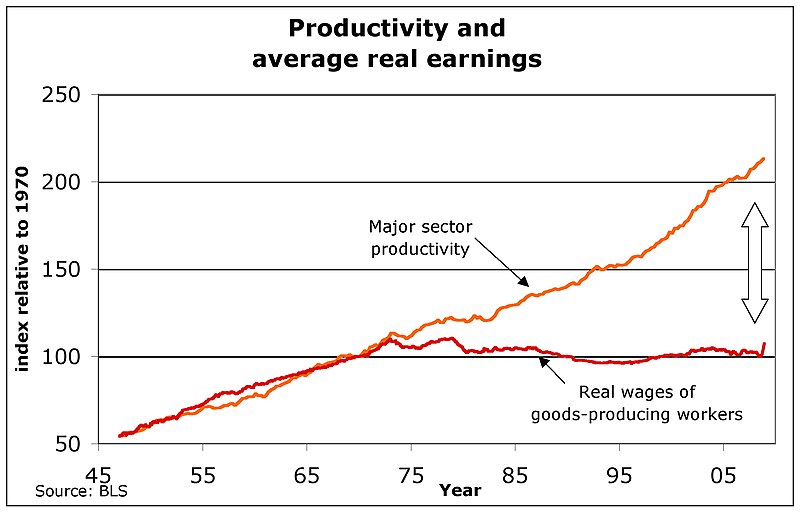

Az, your situation is a pretty good example of a smaller organization where everyone from the CEO on down has skin in the game and has made sacrifices. If you took your example and multiplied it by 1000 to make it a larger publicly traded corporation, you would have 10,500 out of the original 18,500 people who still have a job. The difference would be that 10,000+ of those people would be busting their ass doing the work of 1.5-2 people to make up for the lost employees and making less real money while doing it while a small number of executives used those layoffs to demonstrate that they had cut expenses to improve the company's short-term stock price and gotten 6-figure bonuses as a result. Those 10,000+ people are both grateful to have a job and frustrated at being taken advantage of. I think there are more than a few people in that situation and the numbers are growing.AZGrizFan wrote:Guess it's all in whether you view the glass as half full or half empty, 88. The 105 (out of the original 185) people at my company who still HAVE A JOB are very grateful for that. They understand the economics of the situation...because I explain it to them every month at our all-staff meeting. Are there a few that are frustrated? Sure....but the vast majority of my staff "get" it and understand what we're up against.UNI88 wrote:John I can't speak for anyone else but I'm not trying to be deceptive. I've also agreed with you that over time, middle class incomes have generally risen. But I will argue that the picture isn't so rosy from say 2006 or so on when companies started to give smaller to no raises while at the same time asking employees to pay for a greater share of their healthcare costs. I'm not saying that it wasn't justified, with the skyrocketing increase in healthcare costs, employers couldn't afford to pay as much as they used to. What I am saying is that employees real wages, net income, net compensation (be it salaried or hourly) or whatever you want to call it started to decrease relative to what they had made previously. The 2008 crash and recession that followed just made that decrease in net compensation worse and the trend doesn't look good moving forward. The middle class hasn't been hollowed out yet but they are taking a hit, their prospects as a group look to continue to be negative and they're getting frustrated about it.
We have a failure of leadership from the very top in this country where, instead of SOLVING the problem, they stand around pointing fingers and blaming each other or people who were in power 5 **** years ago. What this country needed in 2008 was a uniter and we got the ultimate divider instead (and I'm not saying McCain would have done any better, and may have even done worse)...we needed a Reagan-esque uniter (from a morale standpoint, not policies necessarily), but THAT guy can't get elected in the current political environment. Instead we got a bitter divider who has divided this country along race, geographic, political and socio-economic lines like nobody in my lifetime. They're frustrated about it because the president and congress can't pull their collective heads out of their asses long enough to do what's RIGHT.
I don't think it's the end of the middle class in America but it's a disturbing trend and one that bears watching. If it continues when the economy rebounds, the middle class will either shrink or look for alternatives. i.e. If I'm going to make less working my ass off, I might as well find an organization like yours or be my own boss.
I also agree on the failure of leadership but would argue that the division started in the early 2000's and continues through this day. I think McCain would have been as bad as O'Bama but that the Romney who was Gov of Mass, Bain Capital & SLC Olympics might have been able to fix it. Unfortunately that Romney couldn't get his party's nomination and had to run further to the right so we never really knew which Romney was running in 2012 and that killed his chances in the general election.