Page 1 of 1
Little Girl Does Potato Project; The Importance of Organic
Posted: Thu Mar 13, 2014 12:12 pm
by expandspanos
[youtube]
https://www.youtube.com/watch?v=exBEFCiWyW0[/youtube]
A child's experiment turns into a lesson on the toxins in our food supply.
Re: Little Girl Does Potato Project; The Importance of Orga
Posted: Thu Mar 13, 2014 12:26 pm
by ASUG8
The Agency has determined that the nationwide use of chlorpropham
on stored potatoes to inhibit sprouting as currently registered will not cause
unreasonable risk to humans or the environment and this use is eligible for
reregistration. These products will be reregistered once the required
confirmatory generic data, product specific data, CSFs, and revised labeling
are received and accepted by EPA.
http://www.epa.gov/oppsrrd1/REDs/factsh ... 71fact.pdf" onclick="window.open(this.href);return false;
Then again, this is the same government spraying our skies with aluminum and crashing planes into their own buildings......

Re: Little Girl Does Potato Project; The Importance of Orga
Posted: Thu Mar 13, 2014 12:34 pm
by HI54UNI
Re: Little Girl Does Potato Project; The Importance of Orga
Posted: Thu Mar 13, 2014 12:35 pm
by HI54UNI
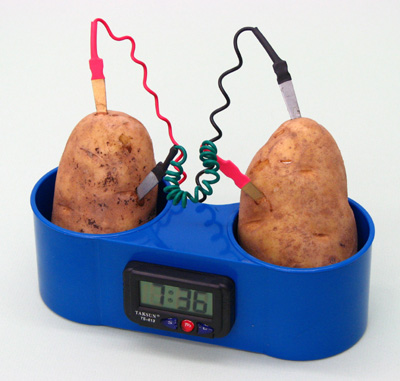
Here's a bigger question - what's in the potato to make a potato clock work?

Re: Little Girl Does Potato Project; The Importance of Orga
Posted: Thu Mar 13, 2014 12:40 pm
by HI54UNI
Re: Little Girl Does Potato Project; The Importance of Orga
Posted: Thu Mar 13, 2014 2:39 pm
by dbackjon
HI54UNI wrote:
You really ripped the tits off of that one!
Re: Little Girl Does Potato Project; The Importance of Orga
Posted: Thu Mar 13, 2014 6:31 pm
by Pwns
HI54UNI wrote:Here's a bigger question - what's in the potato to make a potato clock work?
Look at this, folks. Would
you eat any food that can create an electric current? Just what is the government putting into these things?
Re: Little Girl Does Potato Project; The Importance of Orga
Posted: Fri Mar 14, 2014 4:39 am
by JohnStOnge
To me the "Organic Foods" thing is one of the biggest scams to hit this culture in modern times. It is not better and it is not safer. The risks are just different. What's different is you pay a lot more for a product that isn't really worth any more than the product you could buy for cheaper. Well, I guess it's worth more in the sense that something is worth what people will pay for it. But people will pay more for it, in my opinion, because they've been scammed into thinking it's better for them.
If you go to the FDA web site and "Search" on "Chlorpropham" you will see that the FDA is well aware of the substance and its use on items in the food supply. If there were evidence that it's a human health hazard at the concentrations at which it's being used it wouldn't be allowed. And if you think it would be you don't know FDA and have never been somebody in the Food business who has to deal with FDA.
Yes it's possible things can be missed. As I've said many times what we're dealing with is "not sufficient evidence to conclude there is a hazard" rather than "we've proven there's no hazard." That is the nature of the beast.
But you should know that there are risks associated with Organic Farming as well. Here are a couple of quotes:
A new study on food safety reveals that organic produce may contain a significantly higher risk of fecal contamination than conventionally grown produce.
A recent comparative analysis of organic produce versus conventional produce from the University of Minnesota shows that the organically grown produce had 9.7 percent positive samples for the presence of generic E. coli bacteria versus only 1.6 percent for conventional produce on farms in Minnesota.
http://cnsnews.com/news/article/organic ... tudy-finds" onclick="window.open(this.href);return false;
Campylobacter appears to be the main risk on organic broiler farms. It would be interesting to study specific risk factors of infection with Campylobacter on organic farms. Veldkamp & Bokma-Bakker (2004) stated that contact with other animals and an open drinking-water system are risk factors for infection with Campylobacter. Based on the results from the questionnaire, showing that organic broiler farms use outdoor runs and open drinking-water systems, it can be concluded that these farms run an increased risk of infection with Campylobacter.
http://edepot.wur.nl/35378" onclick="window.open(this.href);return false;
BTW, if you have a choice between ingesting chlorpropham or ingesting
Campylobacter jejuni, and those bad boys WERE among the species identified, ingest the chlorpropham. Trust me.
Re: Little Girl Does Potato Project; The Importance of Orga
Posted: Fri Mar 14, 2014 4:23 pm
by BlueHen86
JohnStOnge wrote:To me the "Organic Foods" thing is one of the biggest scams to hit this culture in modern times. It is not better and it is not safer. The risks are just different. What's different is you pay a lot more for a product that isn't really worth any more than the product you could buy for cheaper. Well, I guess it's worth more in the sense that something is worth what people will pay for it. But people will pay more for it, in my opinion, because they've been scammed into thinking it's better for them.
If you go to the FDA web site and "Search" on "Chlorpropham" you will see that the FDA is well aware of the substance and its use on items in the food supply. If there were evidence that it's a human health hazard at the concentrations at which it's being used it wouldn't be allowed. And if you think it would be you don't know FDA and have never been somebody in the Food business who has to deal with FDA.
Yes it's possible things can be missed. As I've said many times what we're dealing with is "not sufficient evidence to conclude there is a hazard" rather than "we've proven there's no hazard." That is the nature of the beast.
But you should know that there are risks associated with Organic Farming as well. Here are a couple of quotes:
A new study on food safety reveals that organic produce may contain a significantly higher risk of fecal contamination than conventionally grown produce.
A recent comparative analysis of organic produce versus conventional produce from the University of Minnesota shows that the organically grown produce had 9.7 percent positive samples for the presence of generic E. coli bacteria versus only 1.6 percent for conventional produce on farms in Minnesota.
http://cnsnews.com/news/article/organic ... tudy-finds" onclick="window.open(this.href);return false;
Campylobacter appears to be the main risk on organic broiler farms. It would be interesting to study specific risk factors of infection with Campylobacter on organic farms. Veldkamp & Bokma-Bakker (2004) stated that contact with other animals and an open drinking-water system are risk factors for infection with Campylobacter. Based on the results from the questionnaire, showing that organic broiler farms use outdoor runs and open drinking-water systems, it can be concluded that these farms run an increased risk of infection with Campylobacter.
http://edepot.wur.nl/35378" onclick="window.open(this.href);return false;
BTW, if you have a choice between ingesting chlorpropham or ingesting
Campylobacter jejuni, and those bad boys WERE among the species identified, ingest the chlorpropham. Trust me.
Interesting that you are quick to cut and paste studies that agree with your point of view, but when a study doesn't agree with you; you question the research methodology.
Re: Little Girl Does Potato Project; The Importance of Orga
Posted: Fri Mar 14, 2014 5:22 pm
by kalm
I raise a few vege's each year and put just the right amount of fecal matter and no chemicals around them.
Re: Little Girl Does Potato Project; The Importance of Orga
Posted: Sat Mar 15, 2014 7:09 pm
by JohnStOnge
Interesting that you are quick to cut and paste studies that agree with your point of view, but when a study doesn't agree with you; you question the research methodology.
Fair enough. In the future I'll go ahead and look at the design of studies. But the big thing is that organic farming uses manure to fertilize while other modern commercial farming does not. I won't post a study on that but, instead, I'll post something on the subject from an organic farming web site:
http://organaholic.com/2011/01/13/compo ... ertilizer/" onclick="window.open(this.href);return false;
They talk about composting to reduce pathogens. But I think we may be able to leave the realm of research and appeal to common sense to support the proposition that if people are going to be using manure as fertilizer there are going to be risks associated with that.
Re: Little Girl Does Potato Project; The Importance of Orga
Posted: Sun Mar 16, 2014 7:37 am
by JohnStOnge
BTW, BH86, it's not likely that one is ever going to see a study of something like the prevalence of contamination of one type of product vs. prevalence of contamination of another. That's not a "cause and effect" study. It's a survey. You'd have to get a probability sample of the population of each food and that would be very difficult. I deal with data on contamination of foods from time to time and to my recollection I've never seen any generated by probability sampling. When you don't have probability sampling the estimates are going to be biased and you just have to deal with that. And there will always be an asterisk by any comparison between groups.
Here's a link to a recent assessment of the question of whether or not it's worth it to pay a premium price for organic farming product:
http://www.foodsafetynews.com/2012/09/o ... yWv-F6A25J" onclick="window.open(this.href);return false;
As I've written before I am leery of meta-analyses. Obviously the study is not the result of a probability sample based survey. I took to the link to the abstract and the authors did commit the sin of stating "no difference" in at one point within that abstract. However, reading the Food Safety News article tells me that you can clearly see the magnitudes of the differences in sample proportions. Since it's not based on probability sampling the estimates of proportions are probably all biased. A probability sample may have yielded evidence that organic farming food was more contaminated with bacteria, that conventional farming food was, or insufficient evidence to conclude that either was.
But the bottom line is that what the study did "show" is that there is not sufficient basis to think you're better off buying food produced through organic farming. And at some point, if there is a big enough true difference, it's going to jump out regardless of the limitations of the studies involved.
Like the levels of pesticides in the study were higher in the conventional products. The estimate of the magnitude of the difference is probably biased but when you look at the whole picture I think it's save to say that the levels in the populations being represented are also higher. I mean, for one thing, the whole point of organic farming is that they don't use conventional pesticides. So you would reasonably expect to see lower levels of pesticides in organically produced products and you did.
Re: Little Girl Does Potato Project; The Importance of Orga
Posted: Sun Mar 16, 2014 8:03 am
by Chizzang
The only reason "Organic" is perceived as bad is because somebody has managed to derive profit from it... if "Organic" was a corporation with a stock ticker and made Hippies cry you guys would be curled up in a ball blowing yourselves on the trading floor... chanting "profit profit profit"
Organic taken literally just means "done the old fashioned way" on the farm / That's all
It's not bad or good / it's just a practice that some people value
Re: Little Girl Does Potato Project; The Importance of Orga
Posted: Tue Mar 18, 2014 4:00 pm
by Ibanez
Chizzang wrote:The only reason "Organic" is perceived as bad is because somebody has managed to derive profit from it... if "Organic" was a corporation with a stock ticker and made Hippies cry you guys would be curled up in a ball blowing yourselves on the trading floor... chanting "profit profit profit"
Organic taken literally just means "done the old fashioned way" on the farm / That's all
It's not bad or good / it's just a practice that some people value
This is 100% correct.
Re: Little Girl Does Potato Project; The Importance of Orga
Posted: Tue Mar 18, 2014 4:33 pm
by kalm
Ibanez wrote:Chizzang wrote:The only reason "Organic" is perceived as bad is because somebody has managed to derive profit from it... if "Organic" was a corporation with a stock ticker and made Hippies cry you guys would be curled up in a ball blowing yourselves on the trading floor... chanting "profit profit profit"
Organic taken literally just means "done the old fashioned way" on the farm / That's all
It's not bad or good / it's just a practice that some people value
This is 100% correct.
+2
Stolen from a friend:
"Why penalize farmers who want to grow organic food. Or…as it used to be called…FOOD".


Re: Little Girl Does Potato Project; The Importance of Orga
Posted: Tue Mar 18, 2014 6:22 pm
by JohnStOnge
It's not that "organic farming" products are "bad." It's that there isn't support for saying they are "superior." The thing with "organics" is that they charge premium prices under the belief that there is something "superior" about the products. It's "safer." It's "more nutritious." That's the game of the "organic" movement.
But there's not sufficient evidence to say that it's "safer," or "more nutritious" or anything like that. It's a scam. There's not sufficient evidence that you're any better off in any way by virtue of paying more money to buy "organic" products.
Re: Little Girl Does Potato Project; The Importance of Orga
Posted: Tue Mar 18, 2014 7:13 pm
by Chizzang
JohnStOnge wrote:It's not that "organic farming" products are "bad." It's that there isn't support for saying they are "superior." The thing with "organics" is that they charge premium prices under the belief that there is something "superior" about the products. It's "safer." It's "more nutritious." That's the game of the "organic" movement.
But there's not sufficient evidence to say that it's "safer," or "more nutritious" or anything like that. It's a scam. There's not sufficient evidence that you're any better off in any way by virtue of paying more money to buy "organic" products.
Cigarettes used to be considered "Good for you" because the companies that made them said so...
And everybody believed them
Right now Genetically modified food companies are spending a lot of money telling us to believe there is nothing wrong with Genetic Mutation Engineering in our food (and I mean spending a lot of money)
Organic Growers are spending a lot of Money certifying they are Organic and do nothing to the food
Strange isn't it...
Genetically Mutated food does NOT have to be labeled as such
Food grown in the dirt like a regular garden with no Genetic Engineering
does have to be certified and labeled
Strange isn't it
Re: Little Girl Does Potato Project; The Importance of Orga
Posted: Wed Mar 19, 2014 6:59 am
by Pwns
Chizzang wrote:
Genetically Mutated food does NOT have to be labeled as such
Food grown in the dirt like a regular garden with no Genetic Engineering
does have to be certified and labeled
Strange isn't it
Nothing strange about it. There's no money to be made in claiming to have a GMO product when you don't. There's plenty of money to be lost in doing so, though.
No one but no one is going to label their food as GMO when it isn't. Not with the way so many people instinctively cringe when thinking about genetic engineering because of stereotypes from science fiction created by people who don't understand science.
On the other hand, there's a growing contingent of people who feel they
have to eat organic. With certification, it's much harder (if not impossible) for just anyone to claim to have an organic product when they don't. Basically, it ensures fair competition among organic growers. I can't imagine why they would be against that.
Simple principle...you have the choice to label your food as "GMO" or "organic", but you shouldn't be
forced to label them as such when there is no scientific evidence of any health benefits of said foods.

